Béziers

Béziers turned out to be a very interesting city.  As Malcolm said it is indeed a working city.  There are not really any tourist destinations, however a city of this age has plenty of interesting historical sites.  The city itself is busy, sometimes loud, a bit dirty, and always on the move.  There is a large ethnic mix which keeps the tradition evolving.  The cuisine certainly mirrors this.  I suppose my only real complaint is the overwhelming amount of dog pooh.  Truly, it a site to behold.  The sweepers come through three days a week.  They are followed by a large “hotsy” that then washes off the brushes.  I wanted to do a post that was only pictures of the offending goo.  Although some people would think it funny and perhaps artsy (think the Brooklyn Art Museum exhibition Sensation), others (think my mother) would consider it in very poor taste.  Suffice to say, the mothers won out.

Tourist town or no, I found some lovely sites.

My Neighborhood

Next Street Over

Local Afternoon Hangout

Allées Paul Riquet, The Center of All Life

Pierre-Paul Riquet, Founder Canal du Midi

Looks Like They Moved!

Friday Market

Lunch!

Choice of 'Shrooms

Local Fish Stand

Amusement Along the Allée

Local Harvest Celebration

Fountain Along the Allée

Local Inhabitant

Tags:

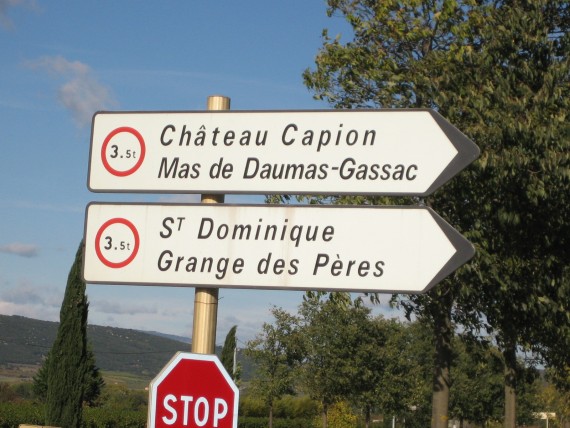
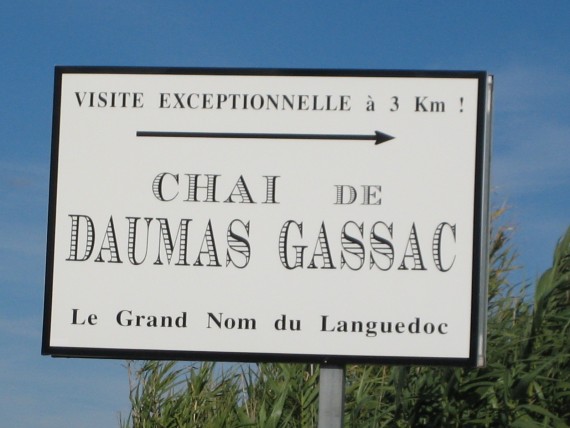
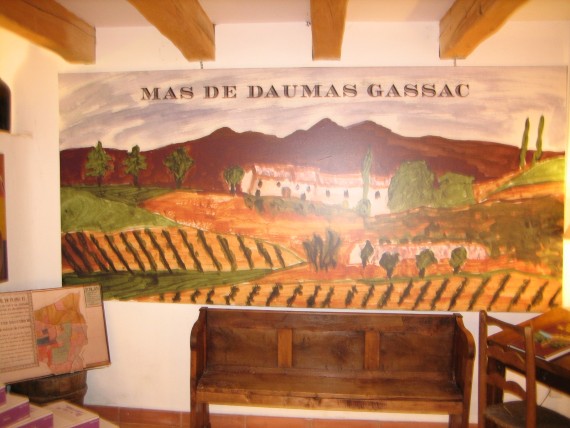
No wine related trip to the Languedoc is complete without a visit to Mas de Daumas Gassac.  This now famed property was stumbled upon by Véronique and Aimé Guibert in 1970 while house hunting. A visit from Professor Enjalbert  in 1971 and his pronouncement that this property could create a Grand Cru launched the planting of Cabernet Sauvignon the following year.   Renowned Bordeaux consultant Emile Peynaud began advising in year one of vinification and by 1982 Gault et Millau proclaimed Mas Daumas Gassac the Château Lafite of the Languedoc.  What is amazing here is how the brand is the feature and not the appellation.  The wines are bottled as Vin de Pays de l’Herault and yet command some of the highest prices enjoyed by any wine from the Languedoc. The owners have never looked back.

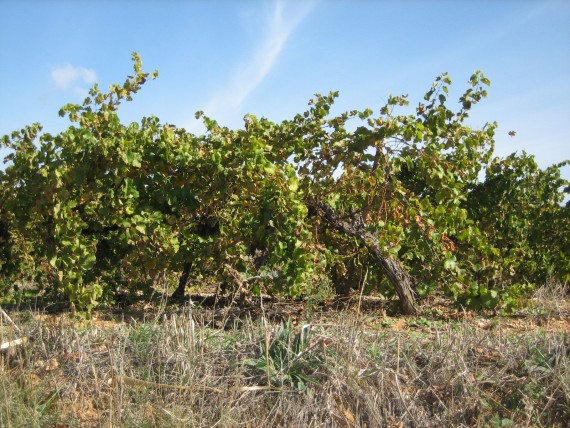
Vineyards of Aniane

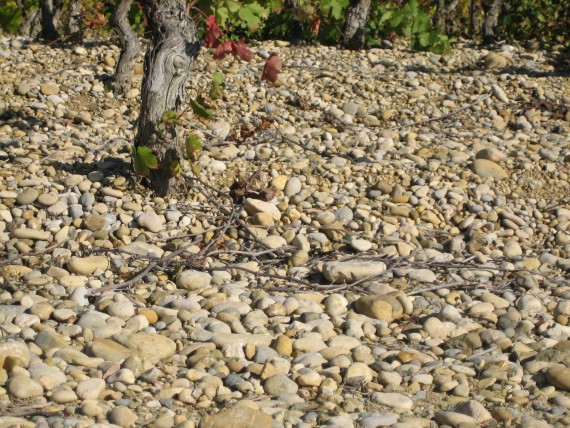
Local Dirt

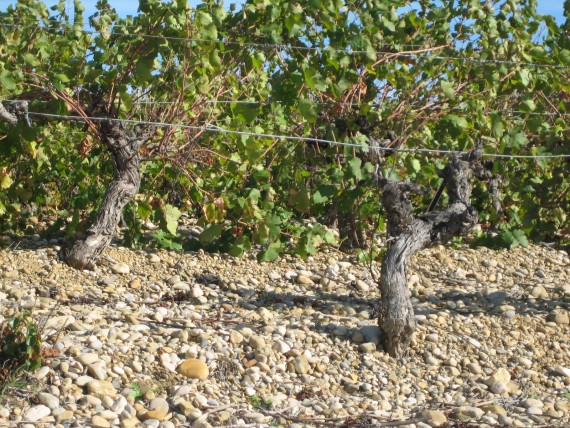
Another Look

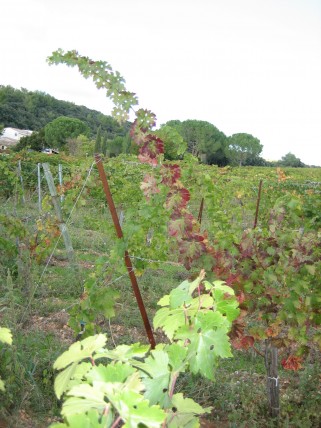
Daumas Gassac Estate Vineyard

The Two Local Great Estates

First Stop

Main Attraction....Exceptional!

Welcome

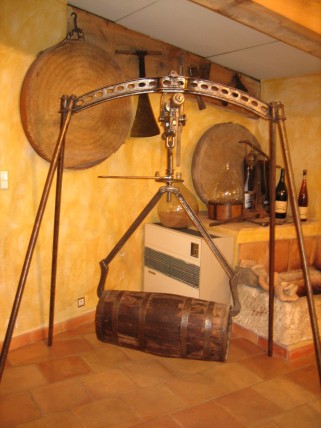
Ancient Forklift

Local Flora

Tags:

La Livinière

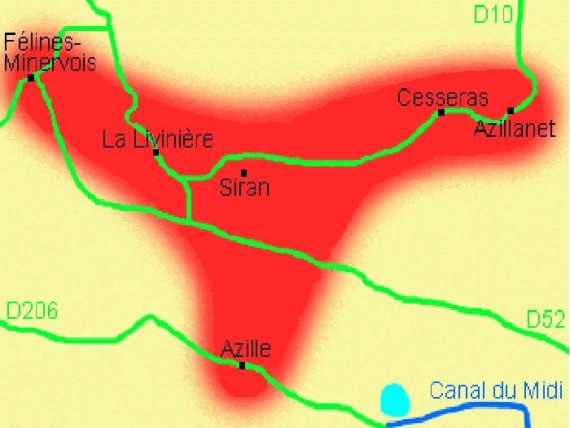
La Livinière lies in the heart of the Minervois, in a natural area known as the Petit Causse on the lower slopes of the foothills of the Montagne Noire.  It covers six villages : Azillanet, Azille, Cesseras, Felines Minervois, La Livinière and Siran.  Somehow all I see in this map is a jock strap, so if nothing else it is memorable.

AOC La Livinière


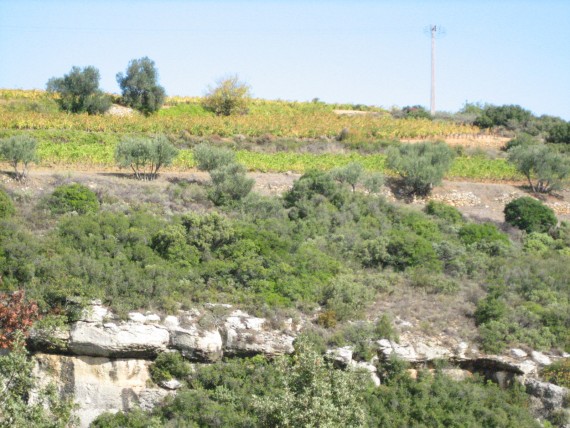
It is an area of dry scrubland (” Causse “), the dominant rock and soils are compact limestone and marl.  This marl is somewhat different from much of the limestone rock that punctuates another wonderful area of Minervois between the villages of La Caunette and Minerve.
Situated between the Serre d’Oupia and the hills of Laure-Minervois, the La Livinière appellation is very dry where rainfall represents between 400 and 500 mm per year none of which falls during the summer months. The particularly high daytime heat in this zone is balanced by low night time temperatures induced by fresh air flowing down from the surrounding peaks.  The resulting wines have high acidity and lively fruit freshness.  I am particularly interested in this growing area along with the ridge top above the Cesse River as mentioned above.  It is likely that one of these two areas (or perhaps with time both) will be the fruit source for the Languedoc cuvée of the future.

Vineyards on the Hilltops

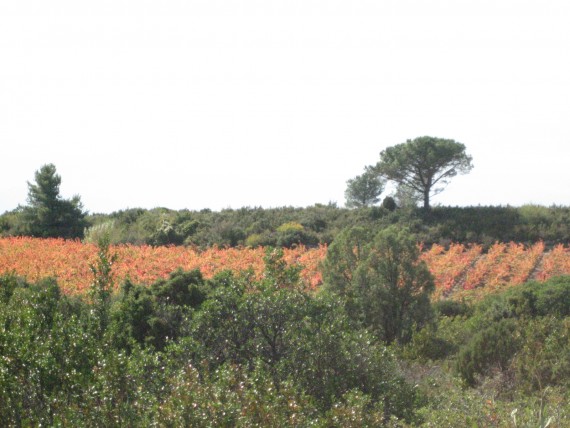
Early Fall Beauty

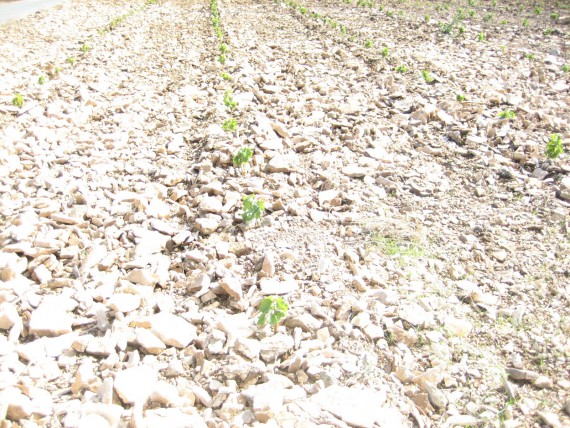
The "Dirt"

Tags:

One of the challenges in exploring grenache in areas such as Roussillon and Languedoc is the amount of syrah that gets into the mix.  Syrah is not one of the “native” varieties as is grenache, carignan, and cinsault.  Syrah, grown widely and originally (as far as France is concerned) in the northern Rhône has become the darling of the government agency (INAO) that runs the appellation system.  No one is quite certain how this all got started but now if a producer wants to use the AOC designation there must be, by law, a certain amount of syrah in the blend.  The amount varies but as syrah is a pretty husky variety even 10% can overwhelm the more delicate aspects of grenache.  A handful of purists actually choose at times to use a Vin de Pays classification rather than the AOC to allow them full control over the blend.  One such purist is Claude EARL (and Isabelle FONQUERLE) from l’Oustal Blanc.  I had the privilege of meeting with Claude one morning at his cellar in La Livinière.  This is a smaller AOC inside Minervois and is quickly becoming renowned for quality.

Claude is famed for his focus on grenache, carignan, and his beloved cinsault.  The cellar is old (1907) and immaculate.  He uses a four step process to the extent that only whole berries, unbroken, and in pristine condition make it into his 50hl concrete cuves (or small barrels for his oldest, lowest yield lots).  He removes the stems and indeed in his process he has two sorting tables, one that is used to remove any bits and pieces of stem that might get through the system.  Each step along the way is designed to accentuate the pure fruit freshness, spiciness and varietal character of the grape.  Knowing that I am a winemaker and specifically interested in grenache, he took me through his process step by step and was incredibly forthright in helping me understand what he has gathered from years of experience (he also worked ten years in Chateauneuf).

The visit was exhilarating.

OK….so where are the cool pictures?  It had to happen one time and this might have been the worst time to push the wrong button and delete the file with the photos from this visit.  Not the incredible line up of swear words, in both French and English, the fist banging, or the tears could make them materialize.  I searched every nook and cranny in this damn box, but to no avail.  I am told that nothing is truly gone from your hard drive.  When I return home I will hand this computer over to a professional and see if that is correct and that these precious photos can be retrieved.  My sincere apologies to Claude.

A beautiful afternoon on the Canal du Midi was also smited in my slight of hand.

It is true…the pictures were not gone.  The “professional” turned out to be David who is pretty comfortable around computers…and to make matters even more embarrassing, the pictures were in the trash bin!!  David did a minute of dumpster diving and here we are:

The Cellar, Established 1907

50 hl Cement Tanks

Receiving Bins
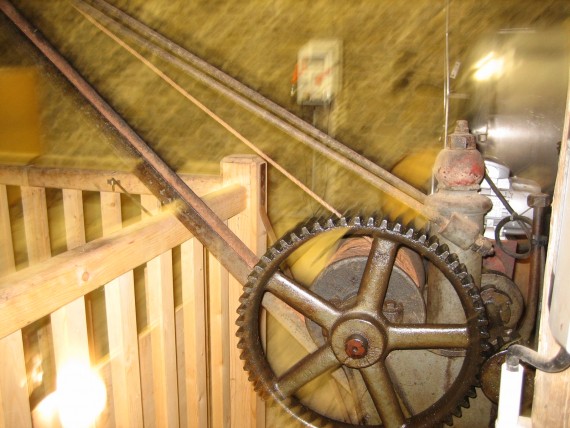
Antique Crane, Now Using Electricity

OVG Small Batch Fermentation

Small Batch Punch Down Device

Cinsault "Cake" Post Pressing

Claude Earl, Vigneron
Tags:

Albi

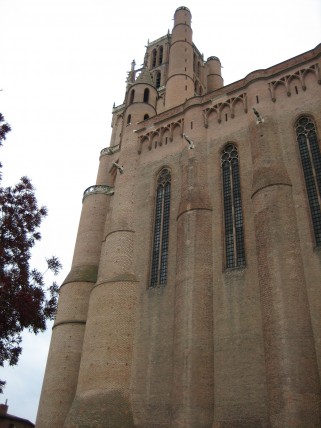
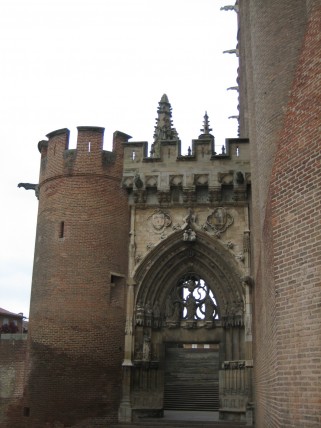
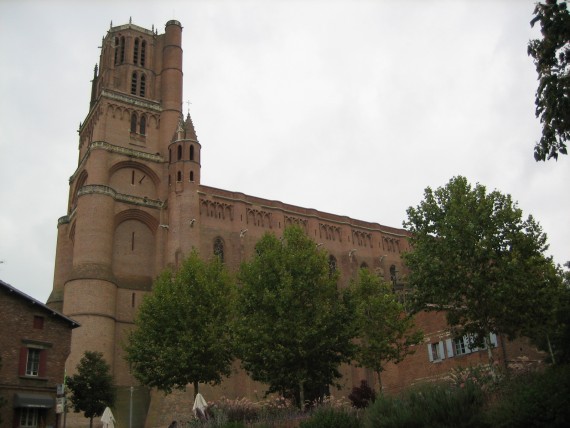
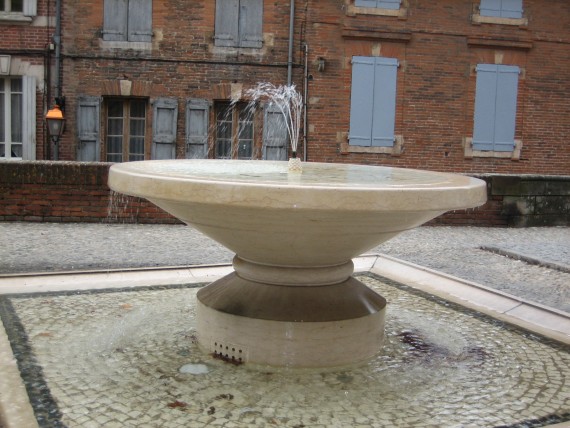
Monday was an early start with a trip to the city of Albi. The historic home of the Albigensians, the town has moved light years from its bloody past.  The outskirts are modern and commercial but within minutes one is inside the old city.  The Bishop’s Palace is just as oppressive as the information contests.  Apparently once the “heretics”, the Cathars were put down the Catholic Church felt the need to make a statement of its power and did so with this imposing building.  It is indeed a huge presence, even today.  Imagine the overwhelming reminder in the 13th century when it was built and the city was just a couple of square blocks.
I was first attracted to the city because of the museum that is now housed at the Palais de la Berbie (Bishop’s Palace), the Henri de Toulouse-Lautrec.  Lautrec was born here and his mother left all of the works that were in her possession to what is now this museum.  The collection includes over 1000 pieces including the 31 posters.  I fell in love with the work of TL when I was in my teens.  Somewhere I saw a postcard of one of his “horse series”.  I was mesmerized by this artwork.  It did not take much effort to find out more as my mother has a huge collection of art books.  A quick check in the index under Toulouse-Lautrec soon had me buried in something called “Impressionism”.   It has been a lifetime interest.

I drove straight into a storm on my long journey to the northwest and was blown into a sweet restaurant near the palace.  The place was over run with Italians, a bit older (even than my generation) led by a young man who was in charge of “the visit to France”.  I love the Italian language and it did not take long for a conversation to start.  My youngest brother is married to an Italian and lives near Bergamo and just that alone is an hour’s worth of engaging conversation.

Quiche, salad, Lautrec, cheese, Italian, rosé, family, art….all in a day’s visit to Albi, a most charming city.

The Village of Cébazan Leaving Béziers

Palais de la Berbie

A Side View

Another Side

Final View

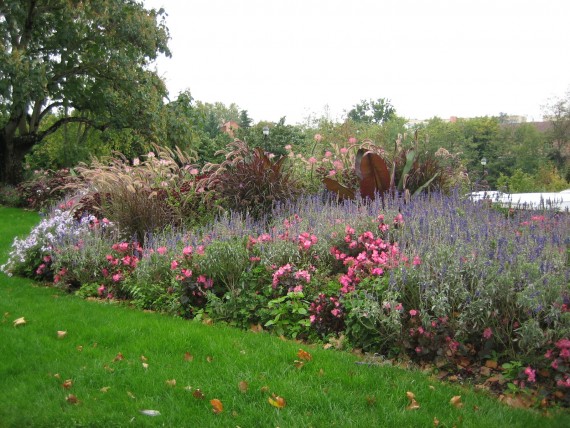
Garden Near the Palais

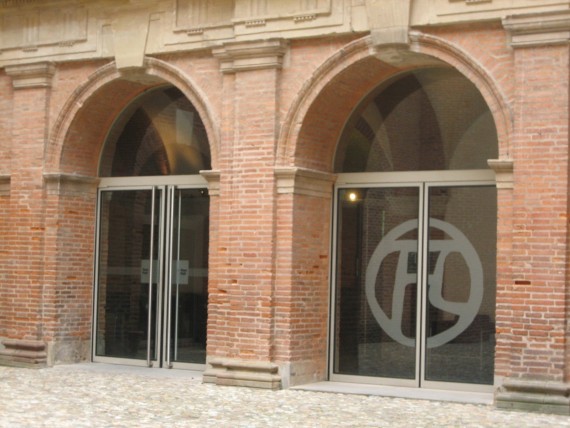
The Entrance to the Museum

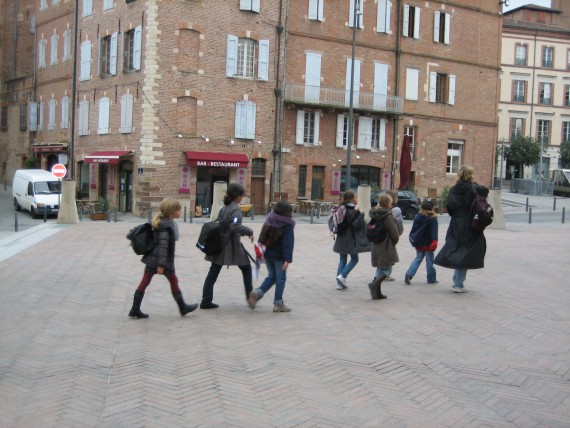
School Kids Leaving the Museum

Windy Weather

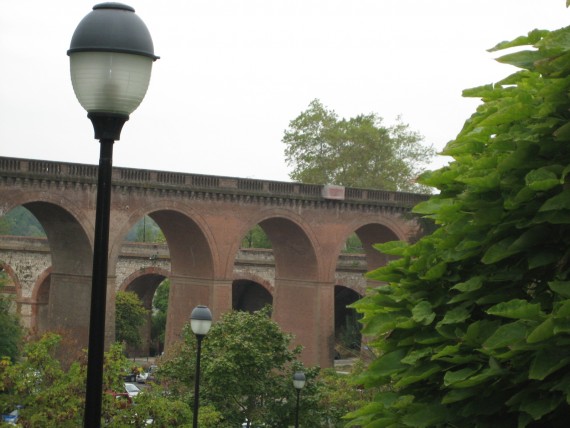
The Old Bridge

Tags:
« Previous posts Next posts » Back to top